Druskininkai Castle Site
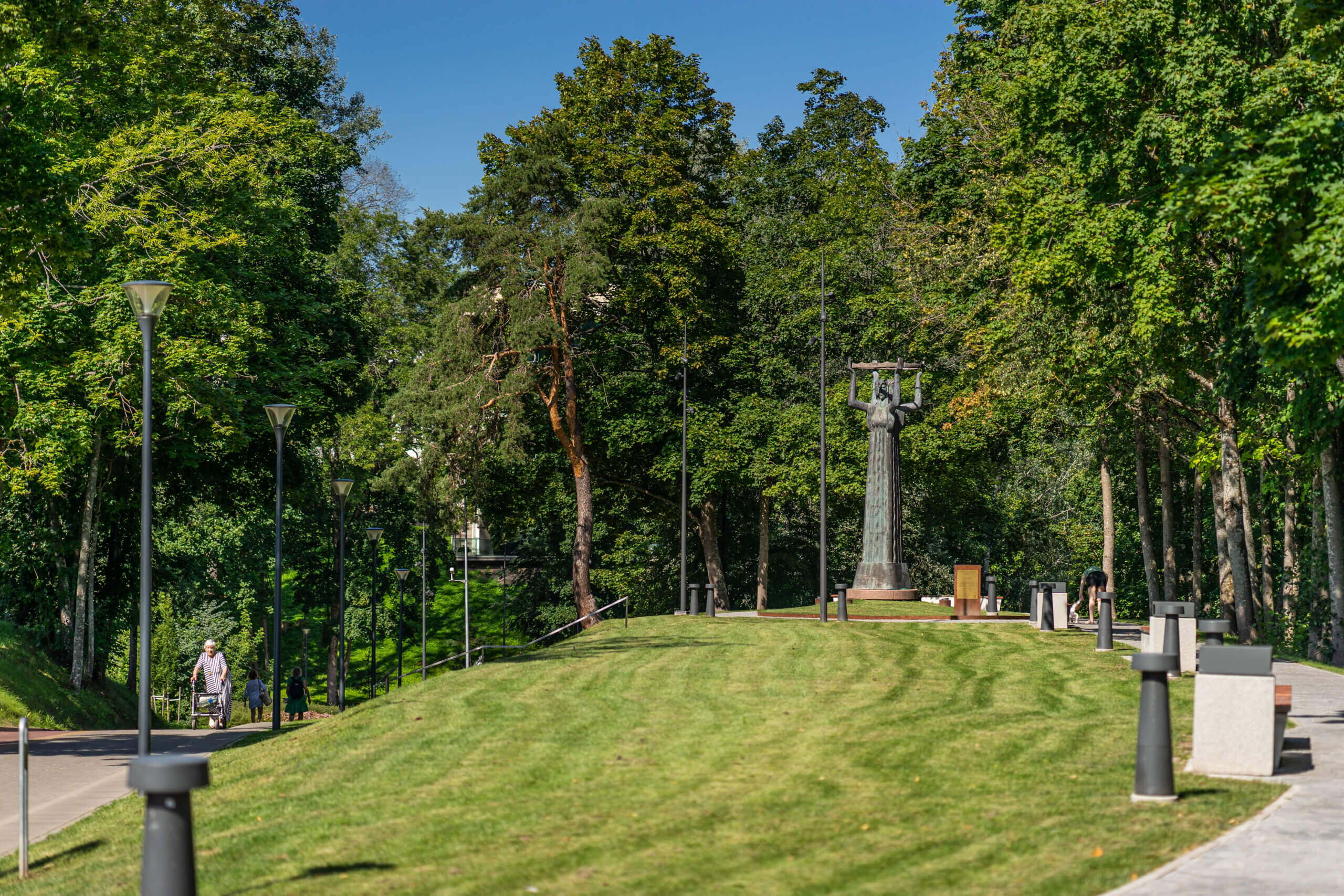
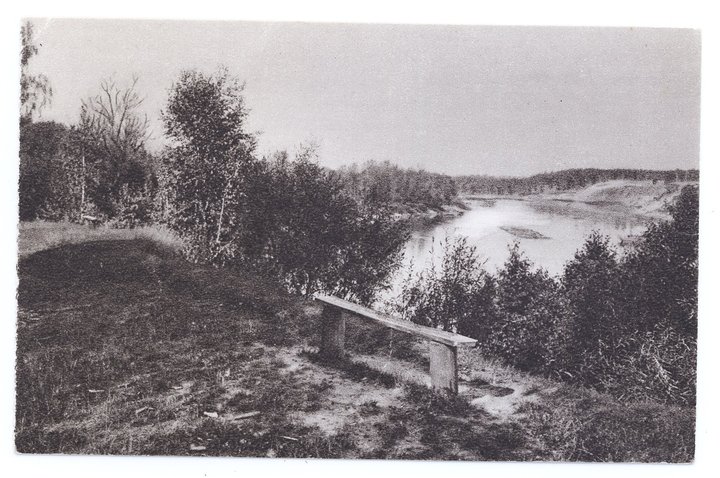
Druskininkai Castle Site is one of the most impressive viewpoints in the city, where nature and history blend into one. For centuries, people have been drawn to this spot by the peaceful curve of the Nemunas River – a panorama that still captivates everyone who climbs the hill. It is no coincidence that during the interwar period this place was especially favored by Polish Marshal Józef Piłsudski, who is said to have spent hours here gazing across the river toward Lithuania.
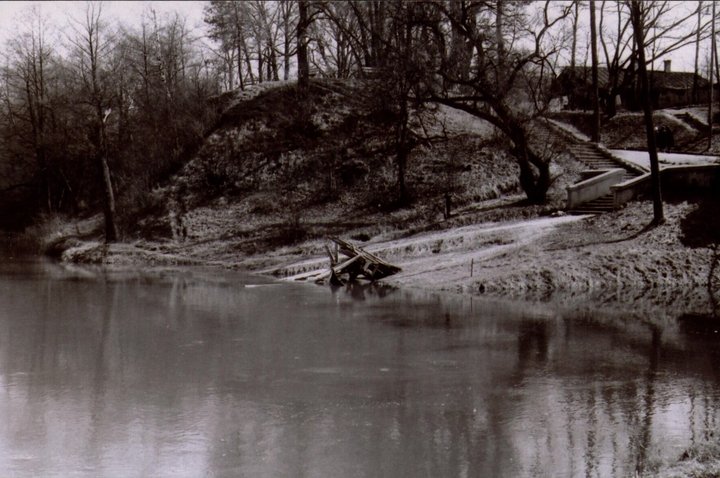
In the 19th century, romantic historians believed that in the 13th century a well-fortified wooden castle once stood here, helping Lithuanians defend themselves against Teutonic attacks. This theory is supported not only by written sources but also by archaeological finds: discoveries made in 1826 at the foot of the hill near the Nemunas by Teodor Narbutt, as well as a nearby burial mound site he explored. However, time and natural forces have taken their toll – the great flood of 1841 caused significant damage to both Druskininkai and the castle site itself. The strong currents washed away part of the hill, widened and deepened the Ratnyčėlė stream, and destroyed bridges and summer houses, leaving behind only traces of what may once have been a significant defensive site.
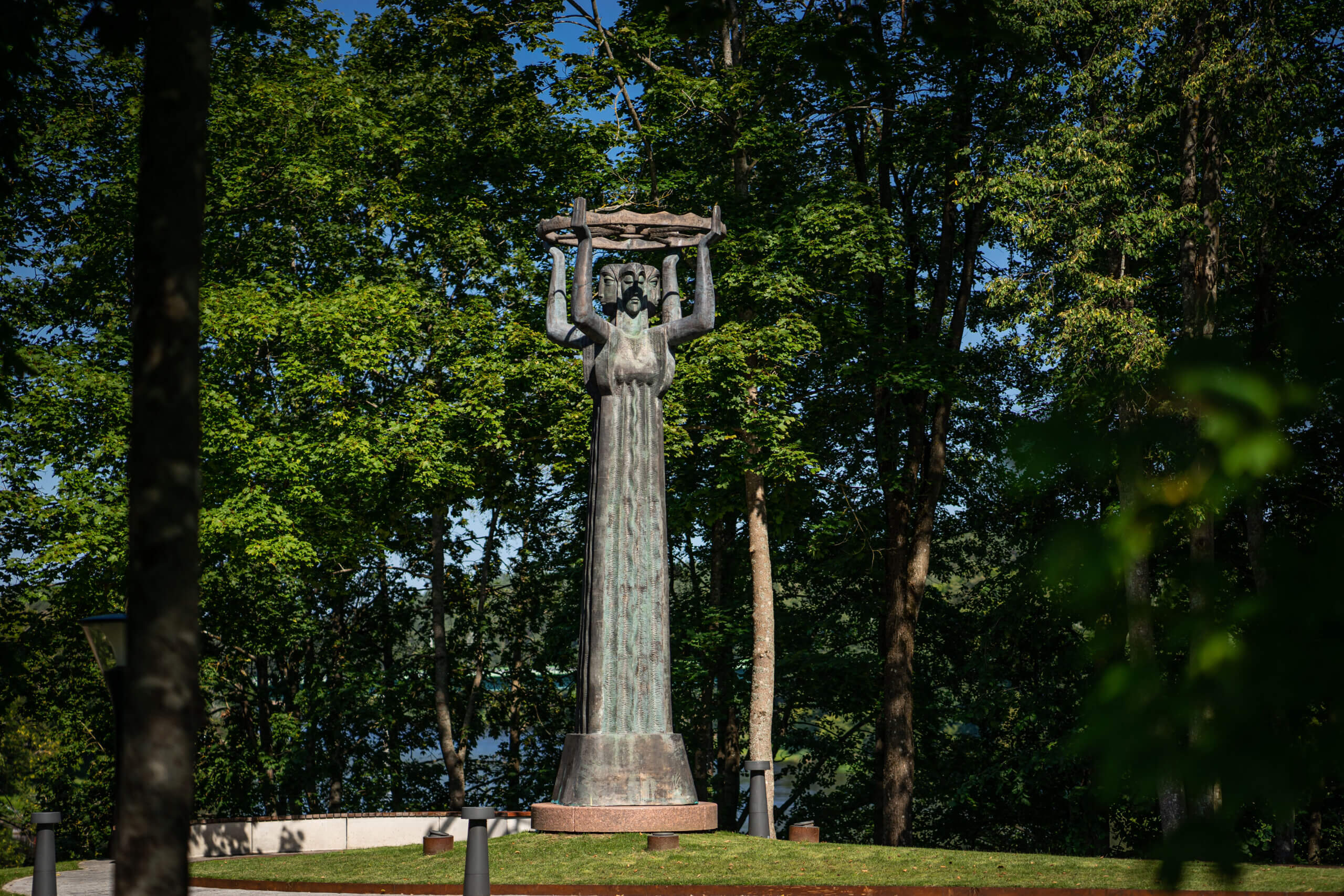
Today, the castle site invites visitors not only to connect with history but also to pause and take in the moment. At the top of the hill stands the striking sculpture “Lithuania – Legend”, a monument dedicated to the country. The figure of a woman with four faces symbolizes Lithuania’s four ethnographic regions – Dzūkija, Suvalkija, Aukštaitija, and Žemaitija – reminding us of the unity and diversity of the nation.
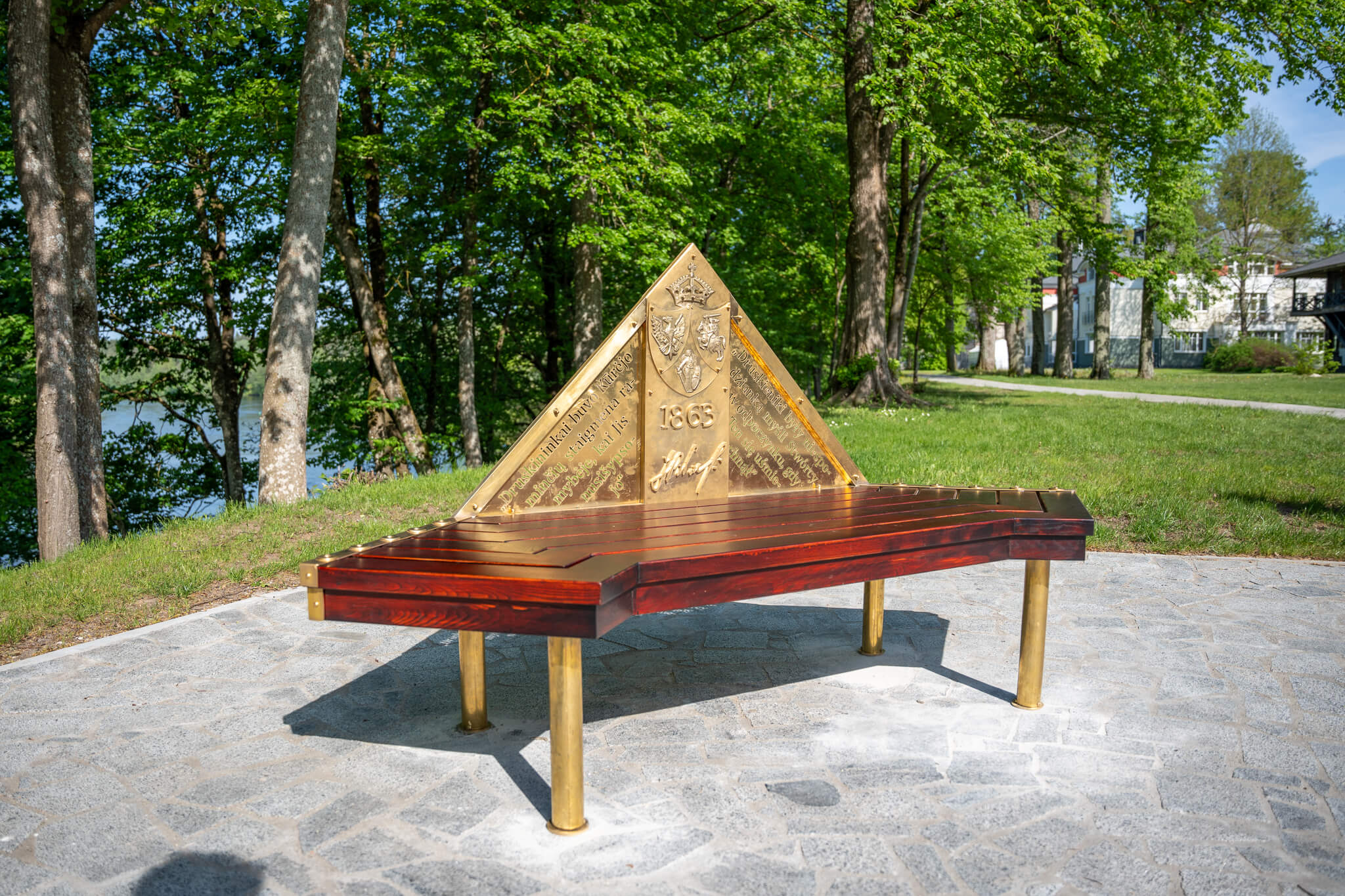
Just a few steps from the castle site, you will find a bench-sculpture dedicated to the Polish community of Druskininkai. It is a tribute to the people who lived, created, and contributed to the fame of the resort: writer Eliza Orzeszkowa, poet Jan Czeczot, writer Józef Ignacy Kraszewski, and the well-known historical figure, honorary citizen of interwar Druskininkai, Józef Piłsudski. The sculpture features the coat of arms of the 1863 uprising, symbolizing the unity of Lithuanians, Poles, and Ukrainians – a message that remains relevant to this day.
The bench also bears Piłsudski’s words about Druskininkai: “Druskininkai was a surprise of the Creator’s thoughts in a moment of serenity, when He smiled.” Sitting here, overlooking the gently flowing Nemunas, it is easy to understand why this place inspired so many remarkable personalities.